
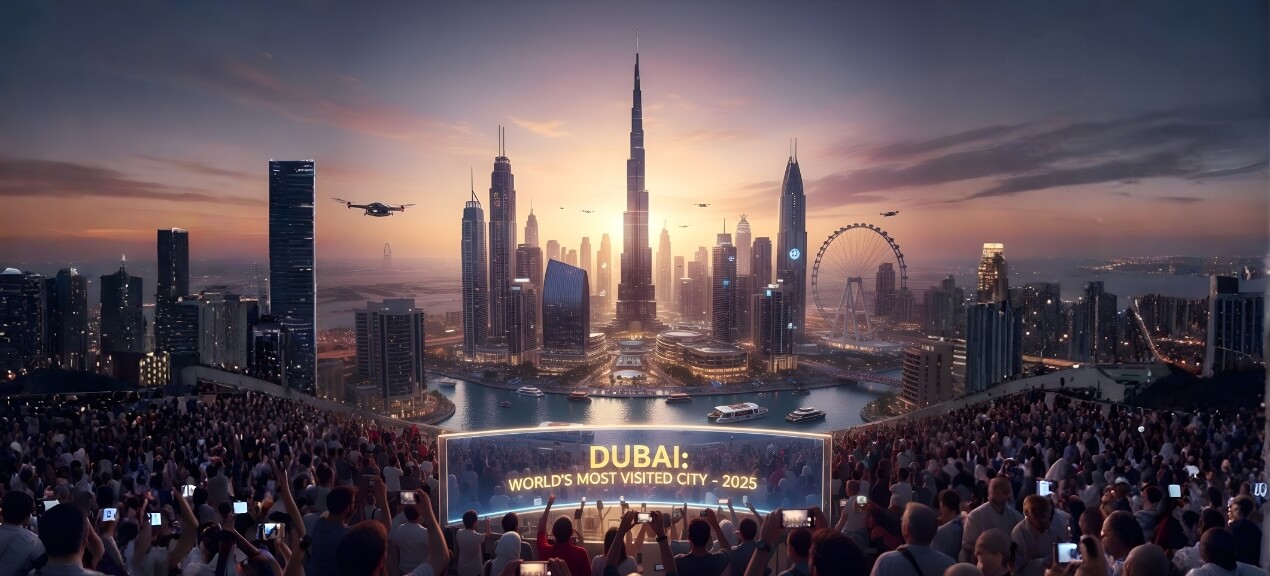
Dubai has achieved a new global milestone. In 2025, the city officially became the most visited destination in the world, overtaking long-established tourism hubs and setting a benchmark for global travel performance. This achievement is not just a tourism headline. But, it is a strong indicator of the city’s economic strength, global appeal, and long-term growth potential across key sectors, especially real estate.
All guarded and supported by strategic planning, massive infrastructure development, and a clear vision for the future, Dubai has strengthened its reputation as a city designed for visitors and long-term residents. For buyers, investors, and anyone stepping into Dubai’s property market, this shift signals one thing: demand is rising, and it’s growing fast.
Record-Breaking Tourism Performance
Dubai’s tourism sector delivered one of its strongest performances in history. The city welcomed nearly 10 million international visitors in the first half of 2025. Compared to the same period in 2024, Dubai’s numbers showed consistent, accelerated growth, not just seasonal peaks.
Unlike many global destinations that experience strong summers and weak winters, Dubai recorded:
- High demand in both peak and off-peak seasons
- Stable hotel occupancy throughout 2025
- Record full-year figures, securing the top global tourism spot
This stability across all 12 months played a major role in strengthening the city’s global ranking.
At the end of the year, Dubai ended 2025 as the world’s most visited city, reaffirming its status as a destination built on reliability, innovation, and year-round appeal.
Tourism’s Economic Impact on Dubai and the UAE
The impact of 2025’s tourism boom was significant. Travel and tourism contributed hundreds of billions of dirhams to the UAE’s economy, accounting for a major share of the country’s GDP.
Key sectors that benefited directly include:
- Hospitality: hotels, resorts, serviced apartments
- Entertainment: theme parks, attractions, events
- Airlines & logistics: Emirates, flydubai, and global carriers
- Retail: malls, boutiques, and leisure destinations
But one of the biggest indirect beneficiaries was the real estate market.
More tourists mean:
- Higher demand for holiday homes
- Stronger occupancy rates
- Increased returns for investors
- Larger request for short-stay rentals
This flow of visitors supported not only tourism but also residential sales, off-plan launches, and long-term rental activity.
Why Dubai Leads the World in Tourism
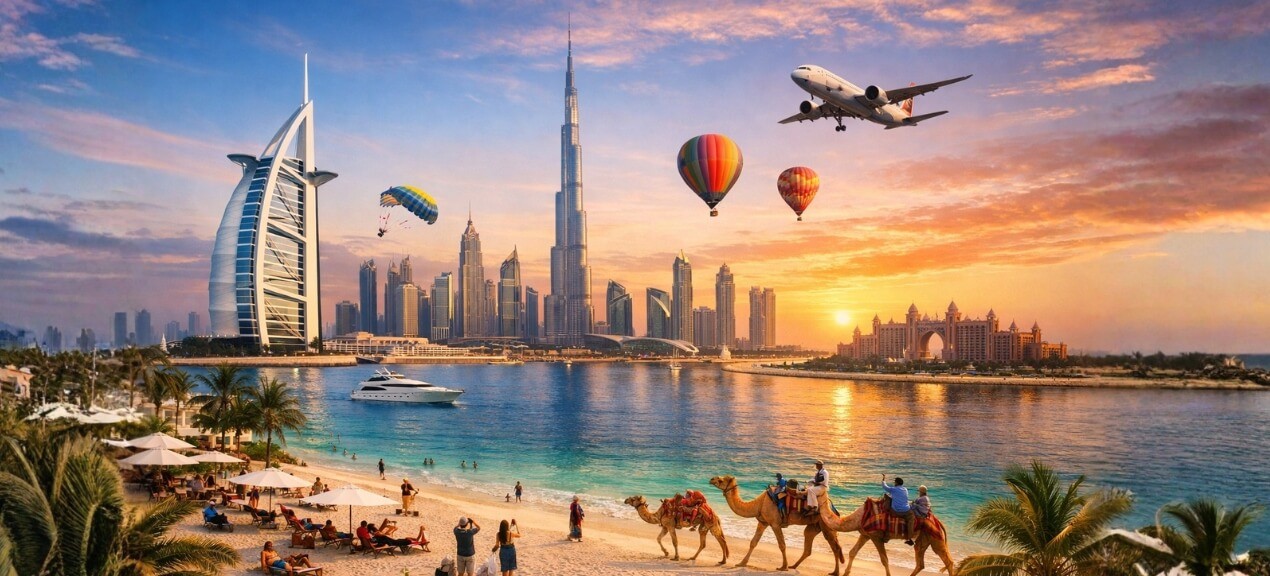
Dubai’s rise to the top is not random. It is driven by strategic advantages that very few global cities can match.
1. Unmatched Global Connectivity
Dubai’s geographic position links Europe, Asia, Africa, and the Middle East within a few hours. Dubai International Airport remains one of the busiest airports for international travel, supported by smooth operations and world-class passenger experience.
2. A City Designed for Every Type of Traveler
Dubai caters to a broad spectrum of visitors:
- Luxury travelers
- Families
- Business executives
- Long-term residents
- Digital nomads
- Investors
From theme parks and beaches to fine dining, culture, and entertainment, the city offers a mix of lifestyle options that appeal to every demographic.
3. Strong Public-Private Partnerships
Dubai’s success comes from alignment between government strategies and private-sector innovation. This ensures:
- Consistent global marketing
- High-quality infrastructure
- Strong safety and security
- Seamless travel experiences
This synergy keeps Dubai competitive, relevant, and future-focused.
Global Rankings Confirm Dubai’s Dominance
In 2025, while many global destinations experienced seasonal slowdowns, Dubai’s performance stayed consistently strong. This year-round tourism demand became a key differentiator and pushed the city ahead of major travel hubs.
Industry analysts recognized Dubai as the most visited city in the world, reinforcing its status as a reliable, high-performing global destination.
Dubai’s Tourism Growth Drives Real Estate Demand
Tourism and real estate are profoundly connected, and Dubai showcases this relationship clearly.
Higher visitor numbers boost:
- Holiday home bookings
- Short-term rental yields
- Demand for branded residences
- Interest from global investors
- Off-plan sales volumes
With millions visiting Dubai each year, more first-time buyers and property investors are now transitioning into long-term residents. This growing interest supports the city’s population growth, occupancy rates, and long-term housing pipeline.
For investors, the opportunity is clear: high demand, strong returns, and year-round occupancy.
What Buyers, Sellers, and Investors Should Expect Next

Dubai’s future plans extend beyond record tourism figures. Authorities are now focused on:
- Expanding hotel and hospitality offerings
- Creating new cultural and entertainment attractions
- Enhancing sustainability and smart tourism
- Developing more visitor-friendly infrastructure
- Strengthening long-term residential communities
This means one thing: tourism will continue to support Dubai’s property market, keeping rental yields wholesome and buyer demand strong.
If the current trajectory continues, Dubai will maintain and possibly extend its lead as the world’s most visited city.
Conclusion
Dubai becoming the most visited city in the world in 2025 marks a major milestone in its global journey. It reflects the city’s stability, ambition, and ability to consistently deliver exceptional experiences. More importantly, it reinforces Dubai’s position not just as a travel destination, but as a long-term home for residents, professionals, and investors.
As tourism strengthens, so does the real estate market, creating opportunities across holiday homes, rentals, off-plan properties, and long-term investments.
To stay updated on Dubai’s evolving property market, explore more insights on our blog and visit our website for the latest listings, market trends, and expert guidance.