Blog | LuxLiving

Etihad Rail May Change How Far UAE Residents Are Willing to Live

Etihad Rail May Change How Far UAE Residents Are Willing to Live

For many years, individuals in the UAE have been greatly influenced by their daily commute when choosing housing. Due to clogged roads, long traffic jams, and unpredictable travel times, people are often compelled to remain near their workplaces, limiting their housing and lifestyle options. However, a new era of transportation is about to begin.

In addition to potentially reshaping the country’s housing patterns and enabling residents to live farther from their workplaces without sacrificing comfort, Etihad Rail’s soon-to-be-operational passenger services might significantly change how people travel across the United Arab Emirates.

How Etihad Rail Improves Commuting?

Etihad Rail will provide a substitute for driving, connecting 11 cities and areas across the United Arab Emirates. Longer commutes are made possible by predictable travel times, which may increase demand in emirates outside of Dubai’s typical commuter belt, such as Ajman, Umm Al Quwain, Ras Al Khaimah, and Fujairah.

“A reliable rail commute turns these emirates into daily commuter markets for Dubai, Abu Dhabi, and Sharjah employment,” says Zacky Sajjad, Director of Business Development at Cavendish Maxwell.

By removing the uncertainty of traffic delays, rail shifts commuting from a stressful experience to a predictable routine, making areas farther from Dubai more attractive to residents.
Who Will Move First?

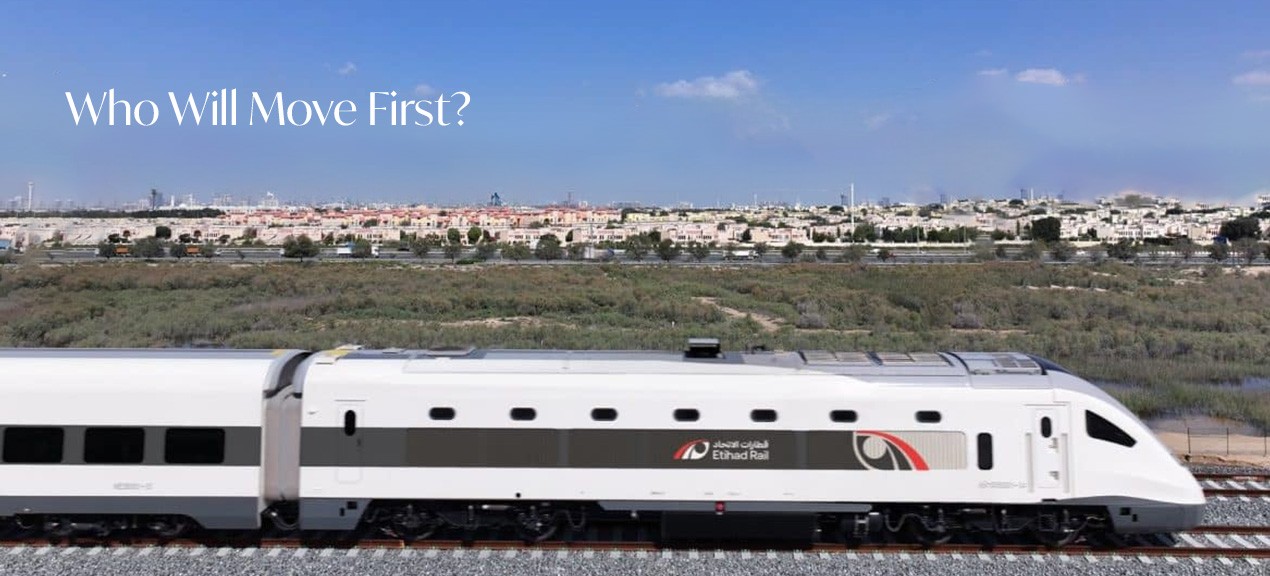
The first people likely to relocate will be mid-income families looking for bigger homes, better schools, and more affordable options, rather than luxury buyers. Professionals who only go to the office a few days a week may also look forward to rail commuting. Workforce housing could benefit too, especially if companies and landlords work together to arrange transportation.

Once renters settle in, investors typically follow, capitalizing on growing property values as commuter patterns emerge.
Early Impact on Property Markets

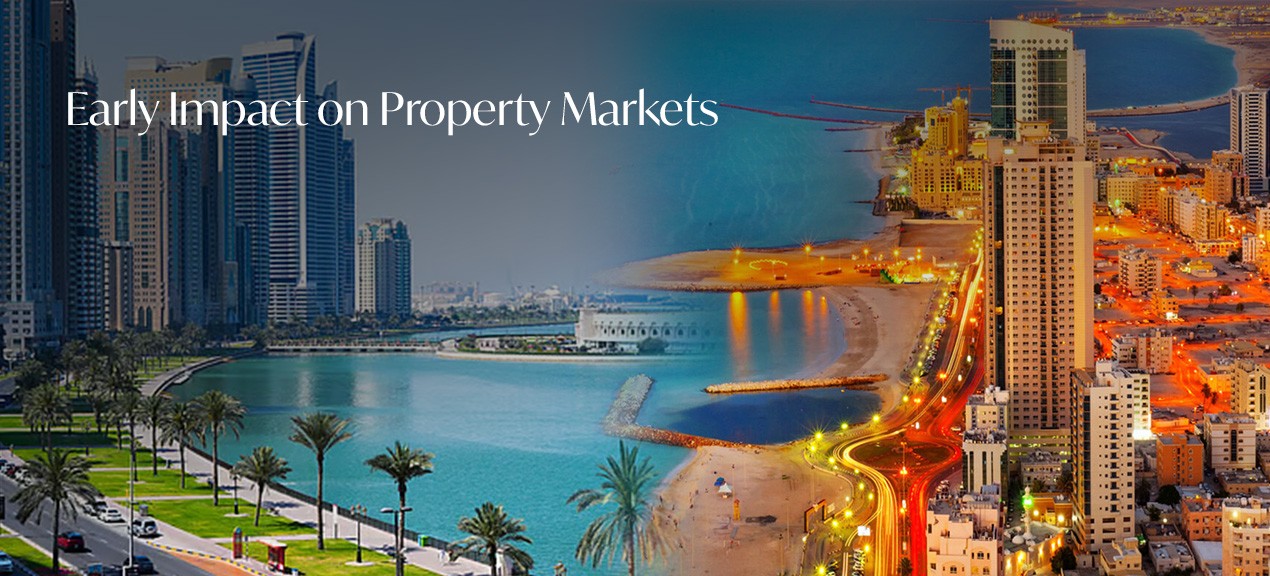
Even before passenger services begin, the Northern Emirates are already seeing growing interest:

  • Sharjah: Villa prices in Sharjah Garden City went up by more than 20%, and apartment prices in Al Nahda went up by 21%.
  • Ajman: The cost of villas in Al Rawda jumped by more than 24%, with specific rental yields exceeding 9%, while the price of apartments in Ajman Downtown rose by 32%.

By offering reliable, stress-free commuting, Etihad Rail might hasten the trend toward larger, value-driven houses. 

Developers Reconsidering the Commuter Belt

Etihad Rail is urging developers to reevaluate urban planning. In neighborhoods close to stations, higher-density, commuter-friendly layouts with smaller units and integrated transportation links are expected.

“A fast, reliable rail link connecting 11 cities redefines the commuter belt,” says Fawaz Sous, CEO of OCTA Properties.

Coordinating with transportation authorities, making sure stations are accessible, and setting up last-mile connections like park-and-ride lots, drop-off zones, and shuttle buses are all necessary to capture value.
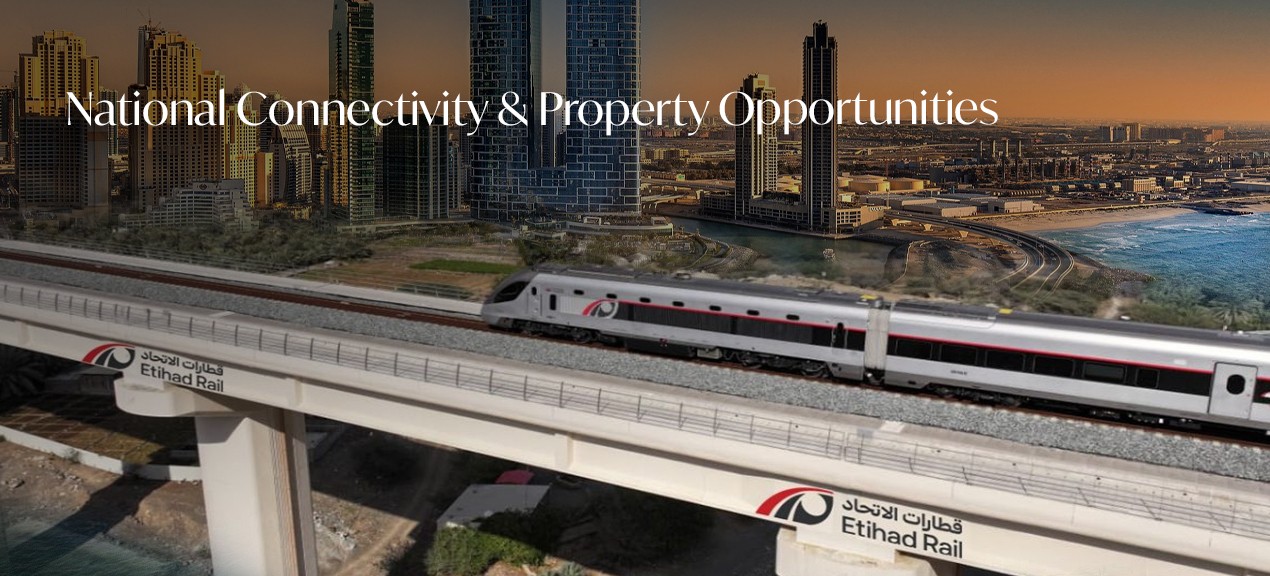
National Connectivity & Property Opportunities

Etihad Rail connects several emirates and increases labor catchments on an interstate scale, in contrast to city-focused systems like the Dubai Metro. Rental markets may be the first to be impacted by this nationwide reach, followed by long-term capital value growth.

According to Zhou Yuan, Operations Director of Tomorrow World, “communities with easy station access and good last-mile connectivity will benefit the most.”

Residents may also consider moving to the northern emirates, narrowing rent gaps with Dubai and expanding affordable housing opportunities for price-sensitive residents. 

What Can Be Expected by Residents?

Etihad Rail is going to provide:

  • Power outlets and Wi-Fi aboard trains
  • Regular routines lessen the stress of commuting
  • Phase one stations are located in Abu Dhabi, Dubai, Sharjah, and Fujairah; further locations will be added over time.

With these services, commuting becomes not just a choice but also a sensible way of life, creating new opportunities for investors, professionals, and families.

Overall, the Etihad Rail will transform living and transportation in the United Arab Emirates, making it more than just a transportation project. By making longer trips more predictable and stress-free, the national rail network may boost demand in the Northern Emirates, expand Dubai’s commuter belt, and create new real estate investment opportunities. Investors, hybrid professionals, and families seeking larger homes may all profit if commute patterns shift.

To explore properties in Dubai and discover the best investment opportunities, visit this website today!
Etihad Rail Route: UAE Rents and Property Prices Surge

UAE rents and property prices surge

The UAE real estate market never stays quiet for long, and 2025 is already proving that. With the much-anticipated Etihad Rail project taking shape, property prices and rental values in nearby communities are climbing at double-digit rates. For end-users, investors, sellers, and even first-time buyers, this development is reshaping where to buy, when to invest, and how much to expect in returns.

Industry experts confirm that properties along the Etihad Rail route have seen up to 25% increases in value and as much as 15% growth in rental rates. If history has taught us anything, it is from the Dubai Metro to Al Maktoum International Airport expansions. It is that improved connectivity leads to higher demand and stronger property appreciation.

Why the Etihad Rail Is Driving the Market

Real estate thrives on one thing above all else: location and accessibility. The Etihad Rail, which will eventually connect all seven emirates over a 900 km route, is designed to transform mobility in the UAE. For residents, this means shorter commutes and easier connections between cities. For investors, it means one thing: that is rising property values.

As we know, accessibility creates demand, and properties located within easy reach of the new rail stations will command a premium, which we expect to be from 10 to 20 per cent.

And this premium is already visible. Dubai Festival City has recorded a 23% increase in rents, while Dubai South and Dubai Investments Park have reported growth of 10–17%. These trends mirror what happened along the Dubai Metro Blue Line, where nearby properties surged by over 20% even before the line was completed.

Areas Leading Growth Near the Etihad Rail Route

Certain communities are outperforming the market thanks to their proximity to the new network.

  • Dubai Festival City (near Al Jaddaf Station): Up to 23% increase in rents, 18% rise in property values.
  • Dubai South: Growth of 10–17%, boosted by its location near Al Maktoum International Airport.
  • Dubai Investments Park: 17% price increase, becoming a hot spot for both families and investors.

These numbers highlight how strategic positioning near transport hubs can transform a community into a prime real estate destination almost overnight.

Lessons Learned from the Dubai Metro

The Etihad Rail isn’t the UAE’s first major infrastructure project to impact real estate. The Dubai Metro Red Line set a clear precedent: properties within walking distance of stations appreciated by 15–25% within a few years of its launch.

And given Etihad Rail’s national scale and its integration with key hubs like the expanding Al Maktoum International Airport, it’s conservative to project a 10 to 15 per cent appreciation in residential values in the near future. In simple terms, the Etihad Rail is expected to deliver even greater returns, all thanks to its nationwide coverage.

Growing Investor and Buyer Interest

Unsurprisingly, buyer and investor interest is accelerating. Many are seizing early entry opportunities, knowing demand will surge once the services begin in 2026.

As we know and have seen, there has been a rise in client interest, with agents guiding clients toward strategic locations where they can enter the market early, with the expectation that demand will push both sales prices and rental yields upward.

In the first three to five years of operation, residential properties close to Etihad Rail stations are projected to see a 15–25% increase in value, making now the perfect time to explore opportunities.

What This Means for End-Users and First-Time Buyers

It’s not only seasoned investors who can benefit. Families, professionals, and first-time buyers in Dubai are also in a strong position. Properties that combine affordability with improved connectivity, such as ready homes in Dubai South or off-plan developments near future stations, offer both lifestyle advantages and long-term value growth.

For renters, this also matters. Over the next 12–24 months, rental values are forecast to rise by 10–15% near key stations. While that means higher rents, it also makes buying a home in these locations an attractive alternative for those considering the leap from tenant to ownership.

Etihad Rail’s Nationwide Impact

The Etihad Rail project is more than a transport initiative; it’s a nationwide economic driver. By 2030, it is expected to serve 36.5 million passengers annually and connect 11 cities and regions across all seven emirates.

This connectivity will:

  • Strengthen the UAE’s position as a global hub.
  • Boost property values in secondary and emerging communities.
  • Offer residents more choice, flexibility, and convenience.

For the real estate market, it sets the stage for sustained growth well into the next decade.

Why Should You Invest Now?

If your goal is long-term capital appreciation, steady rental yields, and strategic positioning. Just as the Dubai Metro reshaped entire neighborhoods, the Etihad Rail is set to do the same, but on a national scale.

Whether you are:

  • An investor seeking high-yield opportunities.
  • A buyer looking for long-term value.
  • A first-time buyer exploring affordable yet connected homes.
  • Or a seller aiming to capitalize on rising demand.

The Etihad Rail has created a unique window of opportunity in the UAE real estate market.

Conclusion

The UAE property market is on the move. With the Etihad Rail driving prices and rents upward by as much as 25%, now is the time for investors, end-users, and first-time buyers to act strategically.

If you want to make smarter decisions in the Dubai real estate market, explore more insights on our blog and visit our website to stay updated on the latest market trends, property opportunities, and expert advice.

After all, the property train is leaving the station, so don’t miss your seat.