Many investors are wondering if the Dubai real estate market would crash in light of the escalating tensions between Iran and Israel. The most recent data from early March 2026 reveals a different story, despite the fact that headlines can often spark fear.
Although Dubai has long been seen as a secure haven for foreign investors, stability issues are frequently brought up by geopolitical uncertainty. In this blog, let’s break down the current Dubai real estate market scenario in 2026, how global tensions could affect it, and whether investors should worry about a potential market crash.
Current Dubai Real Estate Market Scenario: Will the Market Crash?
Recent tensions between Iran and Israel have created instability in the region, which has forced some investors to pause their plans of buying a property in Dubai.
But uncertainty doesn’t mean a crash. Despite worldwide crises, Dubai’s real estate market has remained strong. Over 270,000 transactions totaling AED 917 billion were recorded in the Dubai real estate market in 2025; 86% of these sales were paid for with cash rather than mortgages.
Crashes usually happen with high debt and panic selling, neither of which exists in Dubai today, and the market remains stable.
Will Dubai Property Prices Crash in 2026?
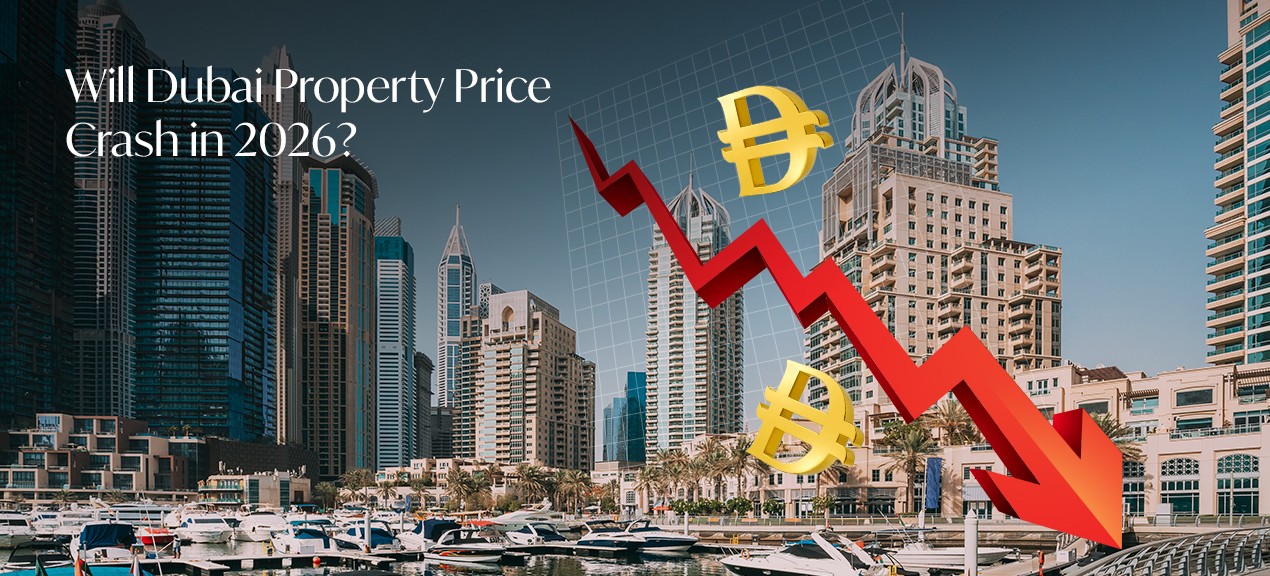
Currently, this is the most popular question on the internet. A crash in Dubai real estate is unlikely, according to the majority of real estate analysts.
Even before the conflict, rating agency Fitch had predicted a possible 10–15% price adjustment in some areas, primarily as a result of an increase in new supply. However, the majority of specialists expect a correction rather than a collapse.
Prime communities like Downtown Dubai, Palm Jumeirah, Dubai Hills Estate, and Dubai Marina are expected to hold or increase in value, making now a good time to invest in Dubai real estate in 2026.
After years of rapid growth, Dubai’s real estate is entering a stabilization phase:
- Moderate price adjustments in some areas
- Stability or growth in prime and luxury properties
- The overall market is maturing, not collapsing
Property prices are projected to grow 5–8% annually through 2026, depending on location and property type.
Is Dubai Facing a Repeat of the 2008 Crash?
This comparison comes up every time there’s turbulence in the Dubai real estate market, but it doesn’t apply.
In 2008, Dubai’s market was overleveraged, underregulated, and built on speculation; however, in 2026, 90% of sales in 2026 are cash-funded, buyers are protected by RERA’s strict escrow regulations, and the majority of buyers are end users rather than investors flipping properties. There are no longer any vulnerabilities that led to the 2008 crash.
How Do Global Conflicts Typically Impact Dubai Real Estate?
Wars and geopolitical tensions usually affect property markets in three ways:
- Short-term uncertainty: Investors may delay property buying decisions until the situation becomes clearer.
- Temporary slowdown in transactions: While buyers wait, real estate market activity may temporarily decline.
- Long-term capital relocation: Stable global cities tend to attract wealth, and Dubai has historically profited from this trend.
As investors relocate their money to safer and more tax-efficient areas, Dubai has actually seen an increase in investment during global instability.
Should You Buy Now or Wait?

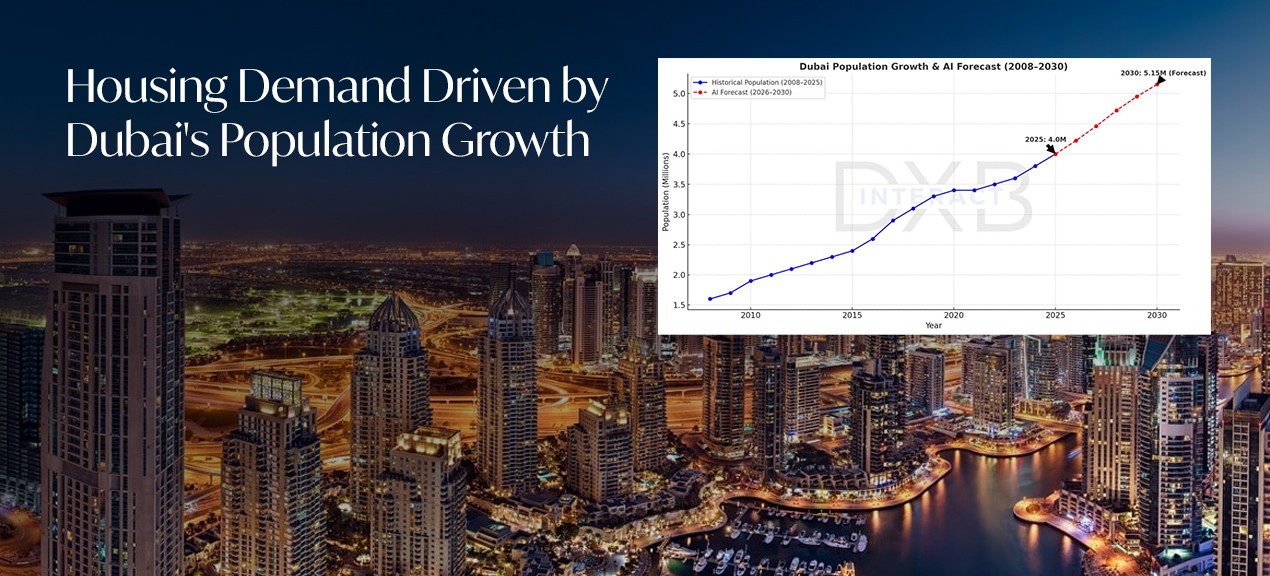
The fundamentals are strong if you’re making a long-term investment in Dubai real estate, whether it’s for personal use, rental income, or a 5+ year investment. The population of Dubai exceeded 4 million in 2025 and is predicted to increase by 175,000 to 225,000 in 2026, maintaining a high demand for real estate.
The next six to twelve months are more risky if you’re looking for a quick flip. Pay attention to reputable developers, well-established neighborhoods with high rental demand, and regions with high rental demand.
The average rental yield in Dubai is approximately 7%, which is significantly higher than in Singapore, London, or New York. Buy-to-let investors can still make good money even if real estate sales temporarily decline.
Conclusion: Why Dubai’s Real Estate Remains Resilient
Dubai’s real estate market is resilient and stable despite the short-term uncertainty brought on by the Israel-Iran conflict. Today’s real estate market is far safer than it was during previous crises like 2008 due to strict regulations, escrow protections, long-term golden visas, and a wide range of international buyers.
The demand for real estate is still supported by Dubai’s expanding population, high rental yields, and consistent economic growth. Investor interest is still high, and international capital is still coming into the city, even though some buyers might take a pause.
In short, Dubai’s real estate market is stabilizing rather than crashing. This is a great chance for long-term investors to see consistent growth in a safe, well-regulated market. Every crisis in Dubai’s history has resulted in a stronger recovery, and 2026 is no exception, so whether you’re looking for a home or an investment, visit LuxLiving to explore more properties in Dubai.
FAQs
1. Are property prices going to fall in Dubai?
Instead of a sharp decline, experts suggest moderate price moderation or correction in some segments; prices may stabilize or slightly decline as supply rises, but core demand is still strong.
2. Is Dubai under threat now?
Industry leaders and analysts claim that despite regional geopolitical tensions, Dubai’s real estate market is resilient and stable due to solid investor confidence and underlying economic fundamentals.
3. Will property prices fall in Dubai in 2026?
While some predictions point to slower growth or slight corrections in some areas in 2026, overall prices are expected to either stay steady or grow slightly rather than fall.
4. What is the future of Dubai real estate?
The future of Dubai real estate will be a stable, balanced market with sustained demand, high rental yields, and continued interest from international investors.
5. What is the forecast for Dubai property for the next 5 years?
Analysts predict that the Dubai real estate market will see moderate price growth overall over the next five years, particularly in prime areas, due to population growth, persistent demand, and economic resilience.